
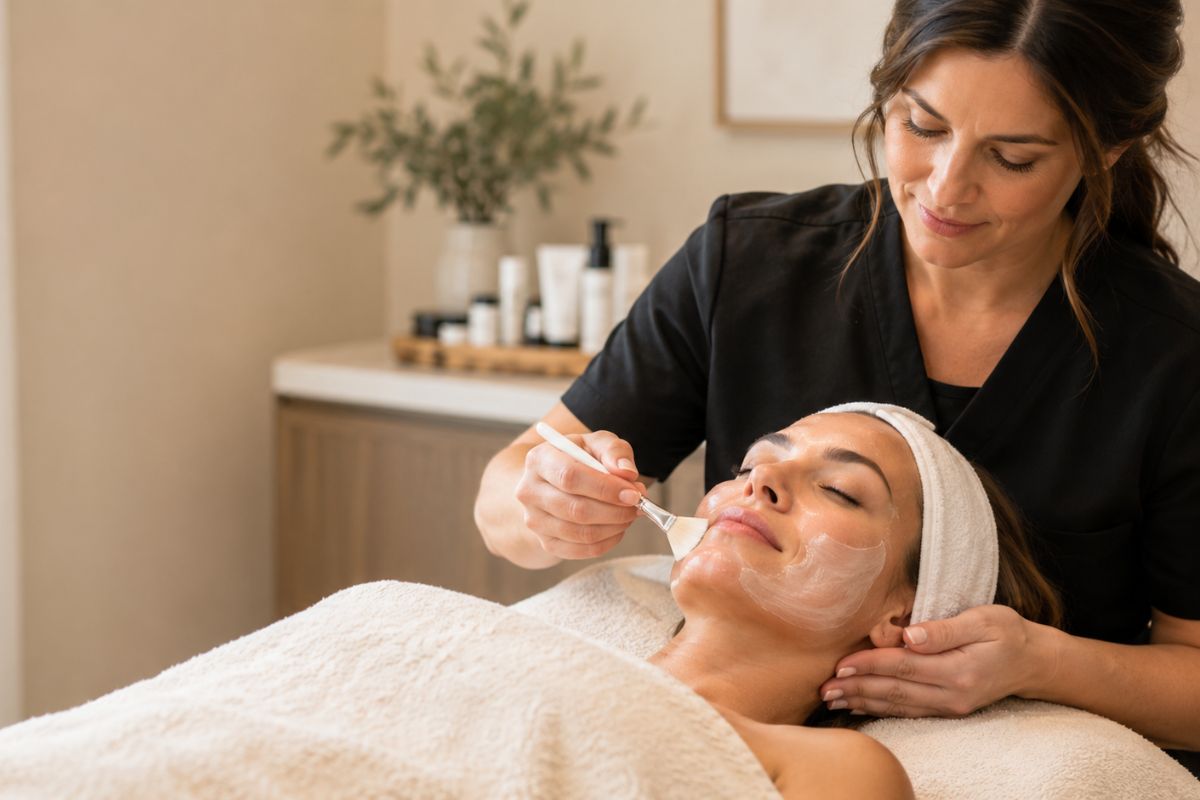
You have probably heard that you should get a facial every four weeks.
Nice, neat answer.
Your skin did not get the memo.
Some months, your skin may feel dry and tight. Other times, congestion seems to appear out of nowhere. Travel, stress, weather, sun exposure, your skincare routine, and even the treatments you have recently had can change what your skin needs.
So, how often should you get a facial?
There is no one schedule that works for everyone. While four to six weeks is a common guideline, the right facial frequency depends on your current skin condition, your goals, the type of treatment, your home-care routine, and how your skin responds between appointments.
If you are considering professional facials and want a plan based on your skin rather than a standard timeline, this is for you. We break down what affects facial frequency, how lifestyle and treatment choices change the answer, signs it may be time to book, and what to expect from facial services at Le Visage Spa & Wellness in Norman.
At Le Visage Spa & Wellness, the approach is centered around personalization. Customized facials begin with understanding your concerns and goals rather than assuming every client needs the same treatment on the same timeline. That matters, because getting facials too often or not often enough can leave changing skin concerns unsupported when the goal is healthy, responsive skin.
Your facial schedule should be based on your skin, not somebody else’s calendar.
How Often Should You Get a Facial?

A general rule for many people is to book professional facials every 4 to 6 weeks, though the ideal frequency can vary. Monthly appointments may work well for some people, while others may need more time between treatments, especially when advanced exfoliation or other intensive treatments are involved.
The right schedule for a professional facial depends on more than how many weeks have passed since your last appointment.
Your ideal facial frequency can depend on your current skin condition, the concerns you want to address, the type of treatment you receive, your sensitivity, your home-care routine, seasonal changes, and how your skin responded after your previous appointment. In other words, facial frequency should align with individual skin type and specific skin concerns.
Someone focused primarily on maintaining hydrated, healthy-looking skin may have a different schedule from someone addressing noticeable congestion or preparing for a specific event.
The treatment itself matters, too.
A customized facial and a more advanced skin treatment are not interchangeable simply because both happen at a spa.
So, how long should you wait between facials?
Look at the complete picture.
What does your skin need today?
What happened during your previous treatment?
How did your skin respond afterward?
What are you trying to accomplish?
Regular skincare does not have to mean getting the exact same facial on the exact same schedule.
Why Facial Frequency Is Different for Everyone
Two people can walk into the same facial spa with completely different skin.
Even your own skin can look and feel different from one appointment to the next.
That is why a useful facial schedule starts with understanding the person behind the skin.
Your Current Skin Condition
Your skin may be dry, dehydrated, congested, oily, sensitive, dull, or experiencing changes in texture. As skin regenerates approximately every 28 days, skin cells move through cell turnover as new skin cells develop, older layers eventually shed, and cells form in sequence, which is one reason regular facials are often spaced around that timing.
And that condition can change.
Oklahoma weather changes. Your routine changes. Your environment changes. The products you use change.
A treatment that made sense several months ago may not necessarily be what your skin needs today.
Instead of asking only, “When was my last facial?” it can be more helpful to ask, “What is my skin doing right now?” That also means noticing where your skin is in its natural renewal process, since skin regenerates every 28 days, benefiting from regular facials.
Your Skin Concerns and Goals
What do you actually want from your facial?
Maybe you are concerned about dryness.
Maybe congestion or acne is driving you crazy.
Maybe you want to improve the appearance of texture, hyperpigmentation, or dark spots.
Maybe your priorities involve anti-aging support and the visible signs of aging.
Or maybe your skin is doing pretty well and you want professional care to help maintain it.
Those are different goals, and your primary goal should shape both treatment choice and timing, so they do not automatically require identical treatment plans.
Your goals can change over time, too. A good facial plan should be able to change with them.
Your Lifestyle
Your skin does not exist in a vacuum.
Stress, travel, exercise, sleep, sun exposure, weather, environmental damage, and environmental conditions can all influence how your skin looks and feels.
A week at the beach is different from a week spent inside during dry winter weather.
A stressful month with very little sleep may show up differently than a month when your routine feels relatively normal.
Your lifestyle is part of the conversation because your skin comes along for all of it.
Your At-Home Skincare Routine
Your broader skincare regimen should work together with professional facials, and consistent at-home care can help extend results between appointments.
The products you use, how consistently you use them, and how your skin responds can influence what makes sense during a professional treatment. Professional exfoliation can also help skincare products absorb more effectively afterward, as long as the routine is appropriate.
And buying another product is not automatically the answer.
Sometimes your routine needs more.
Sometimes it needs less.
Sometimes it simply needs the right products used consistently.
Bring questions about your current routine to your esthetician. It is much easier to make thoughtful recommendations when there is a clear picture of what you are already putting on your skin.
The Type of Facial or Treatment
Not every professional skin treatment does the same thing, and different facial treatments vary widely; classic facials are primarily product-based, while options like microdermabrasion and peels are more procedure-driven.
Le Visage offers customized facials as well as advanced skin treatments designed for different concerns and goals. A customized facial should not automatically be placed on the same schedule as every advanced treatment. Treatments such as chemical peels, HydraFacial, microneedling, light therapy, or led light therapy each have different intensity levels, goals, and timing needs: HydraFacial is designed to exfoliate, hydrate, and boost; chemical peels use professional-strength exfoliants; microneedling treats uneven texture through controlled punctures; and led light therapy uses different wavelengths to target different concerns beyond any at home treatment.
The same applies to services such as ProCell treatments, which have their own treatment and post-care considerations.
Treatment intensity, recovery, goals, and previous skin response all matter when deciding what comes next.
What Happens When You Get Facials Regularly?
Consistency can be useful because professional skincare is not only about what happens during one appointment.
Depending on the facial and your individual needs, a professional treatment may incorporate cleansing, exfoliation, hydration, deep cleansing, attention to congestion, and targeted care for specific concerns. Routine facials can help unclog pores, support acne management, and boost hydration for a healthier glow.
Some treatments also include massage, and stimulating circulation can support skin health.
Regular appointments also give your esthetician opportunities to notice changes in your skin and adjust your treatment plan instead of assuming last month’s plan still makes sense today.
There is another benefit that is easy to overlook.
You get professional feedback.
Maybe your skin has become drier since your last appointment.
Maybe the products you are using at home need to be reconsidered.
Maybe your skin is responding well and there is no reason to throw five new things at it.
Professional skincare should not be about doing more simply because more treatments are available.
Regular does not automatically mean monthly.
Consistency means having a thoughtful plan instead of waiting until your skin reaches DEFCON 1 before paying attention to it.
Can You Get Facials Too Often?
Yes. Depending on your skin and the treatment being performed, overdoing treatment can do more harm than good.
This is especially important when exfoliation is involved.
The American Academy of Dermatology’s guidance on safe exfoliation notes that exfoliation should take skin type and method into account. More aggressive exfoliation generally needs to happen less frequently, and overdoing it can contribute to redness and irritation.
That is one reason facial frequency should not be separated from the treatment itself.
An esthetician may consider what was performed during your previous appointment, how intensive the treatment was, how your skin responded, whether you are currently experiencing sensitivity, whether you’re using active ingredients at home, and what exfoliating or active products you use at home.
More treatment isn’t automatically better skincare. Sometimes your skin needs treatment. Sometimes it needs time.
If your skin is irritated or reacting unexpectedly, the answer is not automatically another intensive treatment. The condition of your skin should help guide both the treatment and the timing.
How Often Should You Get a Facial for Different Skin Needs?
Your current skin condition can influence how your esthetician approaches treatment and discusses future appointments.
But skin type or condition alone should not become a rigid scheduling formula.
Dry or Dehydrated Skin
Skin that feels dry or dehydrated may benefit from a plan focused on hydration, appropriate product selection, and supporting the skin barrier; dry skin often does well with facials every 5 to 6 weeks, while dry or Sensitive Skin may do better every six to eight weeks when barrier stress is also a factor.
Seasonal changes matter here.
Skin that feels comfortable during a humid summer may behave very differently during colder or drier weather, so routines and treatments should shift to keep skin healthy, and hydrating facials can be a good option when the main goal is restoring comfort and moisture.
Your esthetician can also look at what you are using at home. If your routine is contributing to dryness or irritation, repeatedly booking treatments without addressing home care may miss part of the picture.
Oily or Congested Skin
Oily or acne-prone skin does not automatically need the strongest treatment available.
Depending on your skin, a professional facial may focus on cleansing, congestion, appropriate exfoliation, and products suited to your needs, including a closer look at pores. Oily or acne-prone skin often benefits from facials every 3 to 4 weeks, while active acne may call for a 2-to-3-week plan when professionally guided.
It is also worth looking at what happens between appointments.
Is congestion improving?
Has something changed in your routine?
Are you using products that may be irritating your skin?
Those answers can help determine what should happen next.
How Often Should You Get a Facial for Sensitive Skin?
Sensitive or reactive skin deserves an individualized approach.
More intensity is not a badge of honor.
Product selection, treatment type, current sensitivity, and how your skin responded after previous treatments all matter.
For some clients, the smartest plan may involve gentler treatments and more attention to recovery rather than continually increasing intensity.
Facials for Mature Skin
There is no single facial schedule everyone should follow when visible signs of aging become a priority. For mature or aging skin, facials about every four weeks are often used for ongoing maintenance or visible anti-aging support.
The better starting point is your individual goal.
Are you focused on hydration? Texture? Pigmentation? Firmness, support for collagen, or age-related shifts in collagen production? Maintaining healthy-looking skin?
Those priorities can help guide which treatments make sense, including options that may stimulate collagen, and how they fit alongside your home-care routine.
Skin That Is Generally Doing Well
Your skin does not have to be misbehaving before you pay attention to it.
You do not need to wait for dryness, congestion, or dullness to become frustrating before booking a facial.
Professional facials can also be part of maintenance, relaxation, seasonal adjustments, and ongoing skincare guidance. If time or budget is limited, seasonal maintenance facials every three months can still be useful.
Sometimes the goal is not fixing a problem.
It is maintaining what is already working, and normal to combination skin may do well with facials every 4 to 6 weeks for consistent results.
|
If Your Skin Is… |
Your Facial Plan May Focus On… |
|
Dry or dehydrated |
Hydration and barrier support |
|
Oily or congested |
Congestion, cleansing, and appropriate exfoliation |
|
Sensitive or reactive |
Gentler treatments and careful product selection |
|
Showing age-related changes |
Hydration, texture, and individualized treatment goals |
| Generally balanced |
Maintenance and monitoring changes |
Notice what is missing from that table.
A mandatory number of weeks.
Your skin condition is one piece of the decision, not the entire decision.
How Do You Know When It’s Time for Another Facial?
Sometimes your skin starts dropping hints.
It feels unusually dry.
It looks dull.
Congestion is becoming more noticeable.
The texture feels different.
The routine that was working beautifully a few months ago suddenly does not seem to be giving you the same results.
Seasonal changes, travel, stress, or changes in your lifestyle may also make you want professional guidance.
And sometimes?
Nothing is wrong.
Your skin feels perfectly fine, but you would like to keep it that way.
You do not need to wait until your skin feels completely out of balance before seeing an esthetician.
If you are unsure whether it is time for another facial, that is also a perfectly reasonable conversation to have with the professional caring for your skin.
Why Your Skin Assessment Matters More Than the Calendar

A calendar can tell us when your last facial happened.
It cannot tell us what your skin needs today.
That is where professional skin assessment becomes important.
At Le Visage Spa & Wellness, the Advanced Clinical Skin Analysis uses the Pastiche method to evaluate the skin and create a more individualized skincare plan. The assessment considers areas including moisture level, oil content, fine lines and wrinkles, overall skin-color consistency, inflammation, pigmentation, and pores, including pore size.
That information creates a much better starting point than simply deciding you have “dry skin” or “oily skin” and treating it accordingly forever.
Skin is more nuanced than a label on the front of a cleanser bottle.
Kathy Morris has worked in the wellness industry since 1991 and brings decades of experience as a Master Aesthetician to Le Visage. One thing that kind of experience makes very clear? Skin rarely follows a one-size-fits-all schedule.
An assessment can also take your concerns, treatment history, current products, and goals into account before recommendations are made.
Clients coming in for Le Visage’s Advanced Clinical Skin Analysis are asked to bring the skincare products they currently use as well as a list of medications. That gives the esthetician additional context when evaluating the skin.
Your calendar tells us when your last facial was. Your skin tells us what should happen next.
Learn about Le Visage’s Advanced Clinical Skin Analysis and customized facials
What to Expect From a Facial at Le Visage Spa & Wellness
If you’re looking for a facial spa in Norman, OK, you might think you need to know exactly which facial to book before you walk through the door.
You don’t.
That’s part of what your esthetician is there to help you figure out.
At Le Visage, your facial is shaped around your skin concerns, goals, and what your skin needs that day. Current custom facial options are available in 50-, 80-, and 110-minute sessions.
Your experience starts with communication.
What are you noticing about your skin?
What concerns you?
What are your goals?
What are you currently using at home?
From there, your esthetician can assess your needs and personalize the treatment rather than treating every client exactly the same way.
That may include steps to cleanse the skin, exfoliation, masks, and hydration, depending on the plan, along with other techniques appropriate for the facial and your goals.
Afterward, professional recommendations can help you understand what may make sense at home and when another appointment may be appropriate. For post facial care, arrive with a clean face when possible and avoid makeup or strong active ingredients right after treatment if your esthetician advises it.
You do not need to diagnose your own skin before you book.
You simply need to tell us what you are noticing.
Book your facial at Le Visage Spa & Wellness
How to Build a Facial Schedule That Actually Makes Sense for Your Skin
Forget the idea that you need to copy someone else’s facial schedule.
Your friend getting a facial every month does not mean you need one every month. A skincare creator posting about weekly treatments does not mean your skin wants the same thing.
A better way to think about facial frequency is:
Your skin today + your goals + your previous treatment + your home care + how your skin responded = a better plan for your next appointment. Your primary goal and the intensity of the treatment are what maximizes results over time.
That plan can change.
You might initially book professional facials because you are concerned about congestion and later transition toward maintenance. Seasonal changes, new home-care products, or more advanced treatments can also change the timing that makes sense.
The goal is not to lock yourself into one routine forever.
It is to pay attention to your skin and adjust when it gives you new information.
Make Consistent Skincare Part of Your Wellness Routine

If regular facials make sense for your skin, a membership can make it easier to stay consistent without having to rethink your skincare routine every time you need an appointment.
The Emerald Program at Le Visage is designed for clients who want ongoing access to skincare and wellness benefits throughout the year.
For $365 per month, Emerald members receive:
- $50 monthly LV Clinical Credit
- 10% off LV Clinical products
- $10 off every spa service
- Unlimited wellness experiences
The goal is not to lock you into a facial every four weeks.
Your esthetician can still help determine what your skin needs, when another facial makes sense, and whether your treatment should change as your skin changes.
Membership simply gives you a way to build professional skincare into your regular wellness routine rather than waiting until your skin is asking for help.
If your skin benefits from ongoing professional care, having those benefits available each month can make consistency much easier.
Your facial schedule should still be based on your skin. The Emerald Program simply makes it easier to keep that care on your calendar.
Learn more about the Emerald Program at Le Visage
Find the Right Facial Schedule for Your Skin in Norman
Your skin changes.
Your facial schedule can change with it.
If you’re looking for professional facials in Norman, Oklahoma, don’t worry about finding a treatment schedule that works for everyone. Focus on finding an approach that makes sense for your skin.
You do not need to diagnose your skin before you book.
You do not need to know exactly which facial you need.
And you definitely do not need to follow somebody else’s schedule simply because it worked for them.
Your skin deserves its own plan.
Book your facial at Le Visage Spa & Wellness and let your esthetician help you create a treatment plan based on what your skin actually needs.
Frequently Asked Questions
How Often Should You Get a Facial?
There is no universal facial schedule that works for everyone. While you may hear four to six weeks suggested as a general guideline, the right frequency depends on your current skin condition, goals, treatment type, home-care routine, and how your skin responds between appointments.
How Long Should You Wait Between Facials?
There is no set waiting period that works for everyone. The time between facials depends on the treatment you received, your skin condition, your goals, your home-care routine, and how your skin responded after the appointment. More intensive treatments may require additional recovery time.
Is Getting a Facial Once a Month Enough?
Monthly facials may work well for some people as part of a consistent skincare routine, but they are not automatically necessary or appropriate for everyone. Your esthetician can help determine a schedule based on your skin and the treatments you receive.
Can I Get a Facial Every Two Weeks?
It depends on the facial, your skin, and the treatment plan. Some professional treatment plans may involve appointments closer together, while other treatments require more recovery time. More frequent treatment does not automatically mean better results.
How Do I Know When I Need a Facial?
Changes such as dryness, dullness, congestion, texture, or a skincare routine that no longer seems to be working may be reasons to have your skin professionally assessed. You can also book a facial for maintenance and professional guidance even when your skin is doing well.
Can You Get Too Many Facials?
Yes. The type and intensity of the treatments matter. This is particularly important with exfoliating treatments because excessive exfoliation can contribute to redness and irritation.
How Often Should You Get a Facial if You Have Sensitive Skin?
Sensitive or reactive skin requires an individualized approach. Instead of following a generic schedule, consider the treatment being performed, your current sensitivity, the products you use at home, and how your skin responds after each appointment.
Do I Need to Know Which Facial I Want Before Booking?
No. One of the benefits of a customized facial is that you do not have to diagnose your skin or select the perfect treatment by yourself. Your esthetician can discuss your concerns and goals and help determine an appropriate approach.
Where Can I Get a Professional Facial in Norman, OK?
Le Visage Spa & Wellness offers customized facials in Norman, Oklahoma, with treatments tailored around individual skin concerns and goals. Advanced Clinical Skin Analysis is also available for clients who want a more detailed assessment of their skin.